UV LED Lamps: What to Look For When Buying
If you’re doing gel nails at home, a UV LED lamp is your most important tool. It’s the piece of equipment that actually makes gel polish work—without proper curing, your gel manicure will peel, smudge, or never harden at all. But walk into any beauty supply store or browse online, and you’ll find hundreds of lamp options ranging from $15 to $200+. They all look similar and claim to work perfectly, so how do you know which one to buy? Understanding the key specifications and features that actually matter will help you choose a lamp that delivers professional results without wasting money on unnecessary bells and whistles.
Why Your Lamp Choice Matters
The lamp isn’t just an accessory—it’s the engine that makes gel nail systems work. Gel polish contains photoinitiators that react to specific wavelengths of light. When exposed to the right light at the right intensity, these chemicals trigger a hardening reaction that transforms liquid gel into a durable, glossy finish. Without adequate light exposure, this reaction doesn’t complete properly.
A poor-quality lamp or one with insufficient power will under-cure your gel polish. Under-cured gel might feel hard on the surface but remain soft underneath, leading to premature chipping, peeling, or even nail damage. Some gels won’t cure at all with the wrong lamp, leaving you with sticky, unworkable polish no matter how long you wait.
The right lamp cures gel polish completely in the recommended time, ensuring maximum durability and proper adhesion. It also cures evenly across all nails without leaving soft spots. Professional results at home depend on professional-quality curing, which means choosing your lamp carefully.
Understanding Wattage: The Most Important Specification
Wattage measures the lamp’s power output and directly affects curing speed and effectiveness. This is the single most important specification to consider when buying a lamp. Higher wattage means more intense light, which cures gel polish faster and more completely.
For home use, the minimum wattage you should consider is 36 watts. Lamps below this often struggle to cure gel polish properly, especially with darker colors or thicker applications. A 36-watt lamp typically cures most gel polishes in 60 seconds, which is adequate but not particularly fast.
The sweet spot for most users is 48 to 54 watts. These lamps cure gel polish in 30 to 45 seconds, which significantly speeds up your manicure process. When you’re curing base coat, color coats, and top coat for all ten nails, that time difference adds up. These lamps also cure more reliably across different gel polish brands.
Professional-grade lamps often range from 80 to 120 watts or even higher. These cure gel polish in as little as 10 to 30 seconds. While impressive, this power level isn’t necessary for home use unless you’re doing nails for multiple people regularly. The higher wattage also comes with a significantly higher price tag.
Be cautious of lamps that don’t specify wattage at all or use vague terms like “high power” without numbers. This is often a sign of a low-quality product that won’t perform well. Always verify the actual wattage before purchasing.
LED vs UV: Understanding the Technology
Modern nail lamps use either LED technology, traditional UV bulbs, or sometimes a combination of both. Understanding the differences helps you choose the right type for your needs.
LED lamps use light-emitting diodes that produce specific wavelengths of light optimized for curing gel polish. LED technology has several advantages: the bulbs last 50,000 hours or more, essentially the lifetime of the lamp; they cure gel polish much faster than traditional UV bulbs, often in 30 to 60 seconds; they produce less heat, reducing the burning sensation some people experience; and they’re more energy-efficient, using less electricity.
The main limitation of LED lamps is that they only cure gel polishes formulated to respond to LED wavelengths. Most modern gel polishes are LED-compatible, but older formulas or some specialty products may not cure under pure LED light.
Traditional UV lamps use fluorescent bulbs that emit a broader spectrum of UV light. They cure all gel polish formulas, including older ones not designed for LED, but the bulbs need replacement every few months as they lose effectiveness. They’re generally slower than LED lamps, typically requiring 2 to 3 minutes of cure time. They also produce more heat, which can be uncomfortable.
The best of both worlds is a hybrid UV/LED lamp. These use LED technology but emit a broader light spectrum that cures both LED and UV gel polishes. For most home users, a hybrid lamp is the safest choice because it ensures compatibility with any gel polish you might want to try.
Lamp Size and Coverage
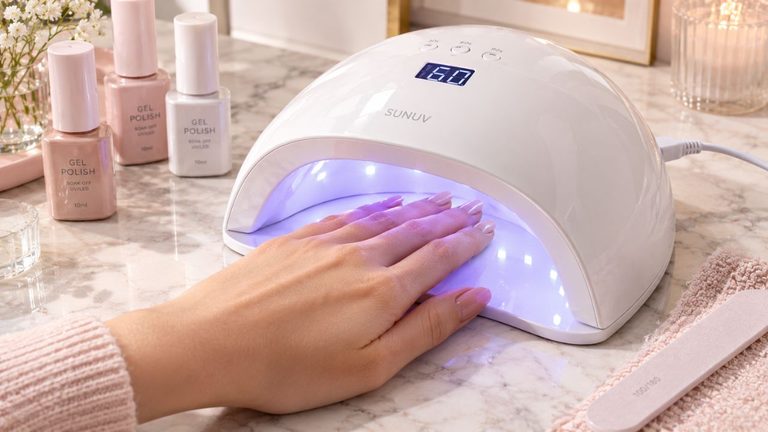
The physical size of the lamp affects how many nails you can cure at once and whether it accommodates both hands and feet. Most standard lamps are designed to cure one hand at a time—all five fingers fit inside simultaneously. This is adequate for home use and keeps the lamp compact.
Measure the interior space of any lamp you’re considering. Your hand needs to fit comfortably without fingers touching the sides or top. If you have larger hands or prefer longer nails, you’ll need a lamp with more interior space. A cramped fit means some nails might not receive adequate light exposure.
The placement of LED bulbs or beads inside the lamp matters too. Look for lamps with LEDs on the top, sides, and even the base for 360-degree coverage. This ensures even curing across all nails, including the sides and underneath the tips. Lamps with bulbs only on top can leave under-cured areas on the sides of nails.
Some lamps are designed specifically for pedicures, with large openings that accommodate feet. If you plan to do gel polish on your toenails, check that the lamp can fit your foot comfortably. Many standard hand lamps are too small for this purpose.
Timer Settings and Auto-Sensors
Timer controls determine how long the lamp stays on during curing. The best lamps offer multiple preset timer options—typically 10, 30, 60, and 99 or 120 seconds. These presets correspond to different curing needs: 10 seconds for quick flash cures between thin layers, 30 seconds for fast-curing gel polishes, 60 seconds for standard curing, and 99+ seconds for gel applications like extensions or thick builder gels that need longer cure times.
Having multiple timer options is more convenient than a single setting. You can choose the optimal cure time for each layer without over-curing or wasting time. Look for lamps with clearly marked, easy-to-use timer buttons. Complicated controls that require reading a manual every time defeat the purpose of convenience.
Auto-sensor features are increasingly common and genuinely useful. The lamp automatically turns on when you insert your hand and turns off when you remove it. This hands-free operation is convenient, especially when working on your non-dominant hand. However, auto-sensor lamps can also be finicky—some are too sensitive and turn off if you move slightly, while others don’t detect your hand reliably.
Manual timers are more reliable and give you complete control. Many professional nail technicians actually prefer manual controls for this reason. The best lamps offer both options—auto-sensor for convenience and manual timers for reliability.
Removable Base Plates
A removable or magnetic base plate is a feature that dramatically improves versatility. The bottom of the lamp detaches, creating an open space that allows you to cure gel polish on toenails or to position your hand at different angles for curing specific areas.
This feature is particularly valuable for pedicures. Instead of trying to squeeze your foot into a lamp designed for hands, you remove the base plate and position your foot under the lamp’s opening. For gel nail extensions or art that extends past your fingertips, the open bottom allows proper light exposure to the undersides.
Some lamps have magnetic base plates that pop on and off easily, while others use clips or slots. Test how easy it is to remove and replace the base plate—if it’s a struggle, you probably won’t bother using this feature even though it’s useful.
Display Screen and User Interface
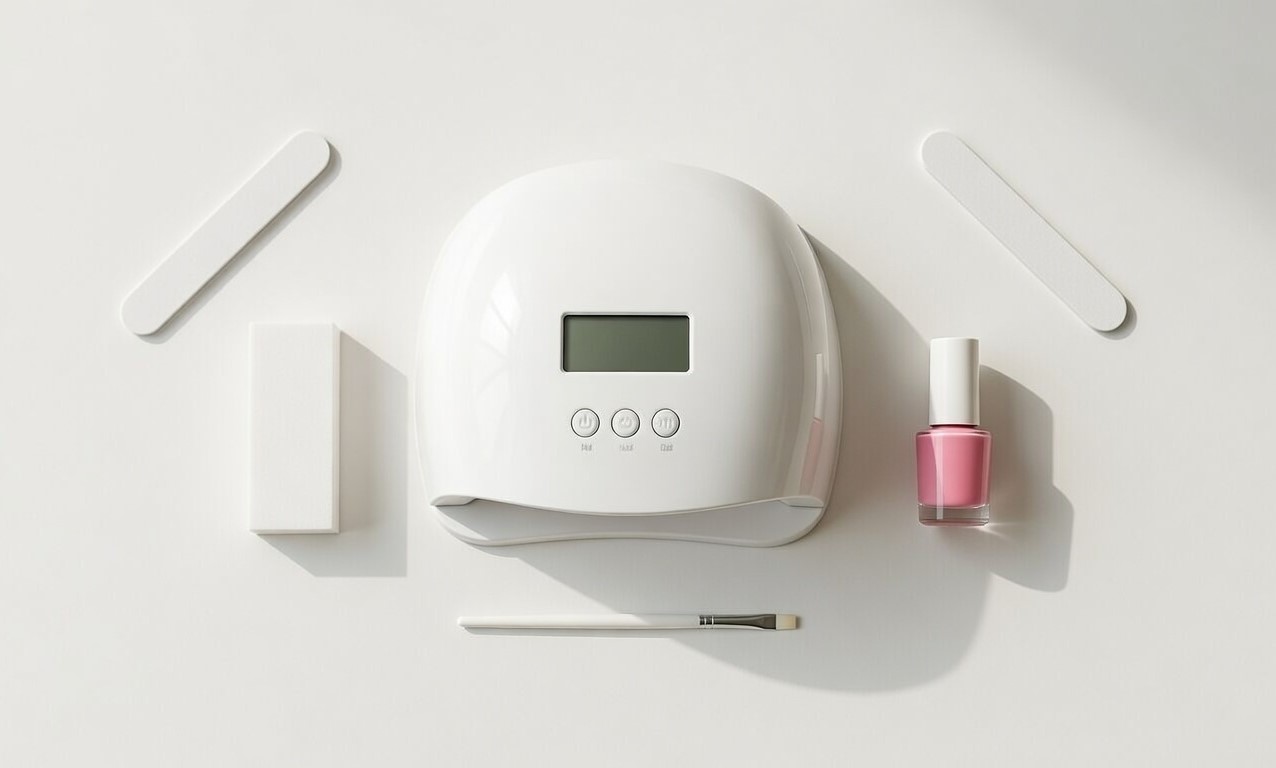
The display screen shows your timer settings, cure mode, and sometimes power level. A clear, easy-to-read display is more important than you might think. You’re often working in varying lighting conditions, and a dim or unclear display is frustrating.
LCD or LED displays should be large enough to read at a glance without squinting. Backlit displays are preferable because they remain visible in bright or dim light. The symbols and numbers should be intuitive—if you need a manual to decipher what’s on the display, the interface design is poor.
Touch controls versus button controls is largely a matter of preference. Touch controls look sleek and modern but can be unresponsive or overly sensitive. Physical buttons provide reliable tactile feedback and are often easier to use with gel-covered fingers. Neither is inherently better, but the controls should be responsive and positioned where you won’t accidentally activate them.
Build Quality and Materials
The lamp’s construction affects both durability and aesthetics. Look for lamps made from quality materials that feel solid and substantial. Cheap plastic that flexes or feels flimsy won’t last long and might not hold up to regular use.
The interior should be made of reflective material that maximizes light distribution. White or silver reflective interiors bounce light around, ensuring even coverage of all nails. Dark or non-reflective interiors waste light and can cause uneven curing.
Ventilation is often overlooked but important. Gel polish releases some fumes during curing, and proper ventilation helps dissipate these. Look for lamps with ventilation holes or slots that allow airflow. This keeps the lamp from overheating and makes the curing process more comfortable.
Check the power cord length and quality. A cord that’s too short restricts where you can place the lamp. The cord should feel sturdy, not thin and cheap. The connection point where the cord meets the lamp should be reinforced to prevent fraying.
Heat Management
All UV LED lamps produce some heat during operation, but excessive heat can be uncomfortable or even painful. The burning sensation some people feel under nail lamps is caused by the exothermic reaction of gel curing combined with lamp heat. While some heat is unavoidable, good lamps manage it better than cheap ones.
Look for lamps with heat management features like built-in fans or strategically placed ventilation. These keep the lamp’s internal temperature reasonable. Some high-end lamps have sensors that adjust power output to prevent overheating.
If you’re particularly sensitive to heat, consider a lamp with a “low heat mode” setting. These reduce power slightly to minimize the burning sensation while still curing gel polish effectively. The trade-off is slightly longer cure times, but for people who struggle with heat discomfort, it’s worth it.
Reading reviews about heat levels is valuable. People commonly mention if a lamp runs uncomfortably hot, so check reviews before purchasing if heat sensitivity is a concern for you.
Compatibility with Gel Brands
Not all gel polishes cure under all lamps, though compatibility has improved dramatically in recent years. Most modern gel polishes are formulated to cure under LED light at wavelengths between 365nm and 405nm. Quality lamps emit light in this range, ensuring broad compatibility.
If you already use specific gel polish brands, check their curing requirements. Most brand websites specify compatible wattage and wavelength. Popular brands like OPI, CND, Beetles, and Gelish provide detailed curing instructions that help you choose an appropriate lamp.
Hybrid UV/LED lamps offer the broadest compatibility because they emit a wider spectrum of light. If you like trying different gel polish brands or use older formulas, a hybrid lamp is your safest bet. Pure LED lamps work beautifully with modern gel polishes but might struggle with certain formulas.
Some lamp manufacturers explicitly list which gel polish brands their lamps are tested with. This information, when provided, is helpful for ensuring compatibility with your preferred products.
Price vs Value Considerations
Nail lamps range from under $20 to over $200, and price doesn’t always correlate with quality. The cheapest lamps are often disappointing—low wattage, poor construction, and unreliable curing. These might work for occasional use but fail quickly with regular use.
The $30 to $60 range offers the best value for most home users. Lamps in this price bracket typically provide 36 to 54 watts, decent build quality, multiple timer settings, and reliable performance. They’re not professional grade, but they deliver professional results for home use.
The $70 to $120 range includes higher wattage lamps with premium features like better displays, superior build quality, and faster cure times. These are excellent if you do gel nails frequently or want equipment that will last for years. The extra cost buys better performance and longevity.
Lamps over $120 are typically professional-grade equipment designed for salon use. They’re overkill for most home users unless you’re doing nails for multiple people regularly. The performance gains don’t justify the cost for occasional personal use.
Don’t make your decision based solely on price. A $40 lamp that lasts three years and cures perfectly is better value than a $20 lamp that breaks after six months or never cures properly. Read reviews and consider long-term value rather than just initial cost.
Safety Features and Certifications
Nail lamps should have certain safety features and certifications. Look for lamps certified by recognized safety organizations like UL, CE, or FCC. These certifications indicate the lamp has been tested for electrical safety and won’t pose fire or shock hazards.
An automatic shutoff feature prevents the lamp from running indefinitely if you forget to turn it off. This conserves energy and prevents overheating. Most modern lamps include this, but verify it’s present.
The lamp should have adequate spacing between the light source and where your hands/feet go. Direct contact with LED bulbs or UV tubes is uncomfortable and can cause burns. Quality lamps are designed with safe spacing.
Check reviews for any mentions of safety issues like electrical problems, overheating, or cords that fray quickly. These are red flags that should steer you away from a particular model.
Portability and Storage
Consider where you’ll use and store the lamp. If you do your nails in different locations or travel with your lamp, size and weight matter. Compact, lightweight lamps are easier to transport and store in small spaces.
Some lamps fold or have handles specifically for portability. These features are valuable if you frequently move your lamp around. However, foldable lamps sometimes sacrifice interior space or durability for portability.
The shape of the lamp affects storage. Boxy designs stack and store efficiently, while unusual shapes might be harder to fit in drawers or cabinets. If space is limited, measure your storage area before buying a lamp.
Noise Level
Most LED lamps operate silently, but lamps with built-in fans can be noisy. While fan noise is usually minor, it can be distracting during the 30 to 60 seconds of curing. If you’re sensitive to noise or plan to do your nails while watching TV or listening to something, check reviews for mentions of fan noise.
Professional-grade lamps with powerful fans can sound like a small computer running. This might not bother you, but it’s worth considering if you value a quiet experience.
Brand Reputation and Warranty
Established brands with good reputations are safer bets than unknown manufacturers. Companies like MelodySusie, SUNUV, LKE, and Beetles are known for reliable nail lamps. They have customer service, replacement parts availability, and accountability if something goes wrong.
Check what warranty comes with the lamp. A good warranty signals the manufacturer’s confidence in their product. Six months to one year is standard for nail lamps. Beware of products with no warranty or very short warranty periods—these might not be built to last.
Read both positive and negative reviews. Pay attention to comments about customer service experiences if people had problems. A company that handles issues well adds value even if their products aren’t perfect.
Common Mistakes to Avoid
Don’t buy based on aesthetics alone. A lamp that looks stylish but has only 24 watts won’t cure gel polish properly, no matter how pretty it is. Function over form is critical with nail lamps.
Avoid lamps that seem “too good to be true” price-wise. A 48-watt lamp for $12 is probably not actually 48 watts or has quality issues. Extremely cheap lamps usually disappoint.
Don’t assume more features mean better performance. A lamp with a dozen timer settings isn’t better than one with four settings if the basic curing function isn’t solid. Focus on the essentials—wattage, build quality, and reliable curing—before worrying about extra features.
Don’t buy a lamp that’s incompatible with your gel polish. If you already have favorite gel polishes, ensure any lamp you buy will cure them. Check brand recommendations and wavelength compatibility.
Testing Your New Lamp
When your lamp arrives, test it before your first full manicure. Apply gel polish to one nail, cure it according to the gel’s instructions, and check the results. The gel should be completely hard with no tacky residue (unless it’s a wipe-off top coat). The color should be even with no soft spots.
Try curing different gel polish brands and colors if you have them. Dark colors and glitters sometimes need longer cure times, so testing ensures your lamp handles these well. If gels aren’t curing properly, contact the seller immediately—you might have received a defective unit.
Test all the timer settings and features. Make sure buttons work reliably and the display is clear. Check that the auto-sensor (if present) responds consistently. It’s better to discover issues during the return window than months later.
When to Upgrade Your Lamp
If you already have a nail lamp, you might wonder when it’s worth upgrading. Signs it’s time for a new lamp include inconsistent curing where some nails cure properly but others don’t, significantly increased cure times suggesting the bulbs are weakening, physical damage like cracks or loose components, or if you’re using a low-wattage lamp (under 36 watts) and want faster, more reliable results.
Upgrading to a higher wattage lamp can dramatically improve your gel manicure experience. The difference between a 24-watt lamp and a 48-watt lamp is substantial—faster curing, more reliable results, and less frustration. If you’ve been struggling with your current lamp, upgrading might solve problems you thought were technique-related.
The Bottom Line
Choosing a UV LED lamp doesn’t have to be complicated if you focus on what truly matters. Prioritize wattage first—aim for at least 36 watts, with 48 to 54 watts being ideal for home use. Choose LED or hybrid UV/LED technology for versatility and longevity. Ensure the lamp has multiple timer settings for flexibility.
Look for good build quality with reflective interiors and adequate ventilation. Verify the lamp is compatible with your gel polish brands. Read reviews from actual users to learn about real-world performance and durability.
A good nail lamp is an investment that will serve you through hundreds of manicures. Spending $40 to $70 on a quality lamp makes sense when you consider it will last years and enable professional-quality results at home. Cheap lamps might save money initially but often cost more in frustration and replacement over time.
The right lamp transforms your gel manicure experience from frustrating to professional. Your gels will cure completely and reliably, last as long as they’re supposed to, and look salon-quality. With the right lamp and proper technique, there’s no reason your home gel manicures can’t rival anything you’d get from a professional. Choose wisely, and you’ll have beautiful, long-lasting gel nails whenever you want them.
What UV LED lamp do you use for your gel nails? What features have you found most useful? Share your experiences in the comments!