
Press-On Nails vs Acrylics: Which Is Better?
The debate between press-on nails and acrylics has been heating up in recent years as press-on technology has dramatically improved. What was once a clear winner—acrylic nails for quality, longevity, and appearance—has become a genuine competition. Today’s press-on nails can look just as professional as salon acrylics, and they come with their own set of advantages. So which option is actually better? The answer depends on your lifestyle, budget, nail health priorities, and personal preferences. Let’s break down every aspect of both options so you can make the best choice for your needs.
What They Are and How They Work
Understanding the fundamental differences between these nail types helps clarify their respective pros and cons. Acrylic nails are created by mixing a liquid monomer with a powder polymer to form a malleable bead that’s applied to your natural nail. This mixture hardens through a chemical reaction, creating a durable artificial nail that’s sculpted and shaped while wet, then filed and polished once cured. The process requires professional training and specialized equipment, which is why acrylics are almost always done in salons.
The application involves roughening your natural nail surface to help the acrylic adhere, applying a primer, then building the acrylic nail in layers. The result is a permanent extension that becomes part of your nail until it grows out or is professionally removed. Acrylics can last two to three weeks before needing a fill, and they’re known for their strength and durability.
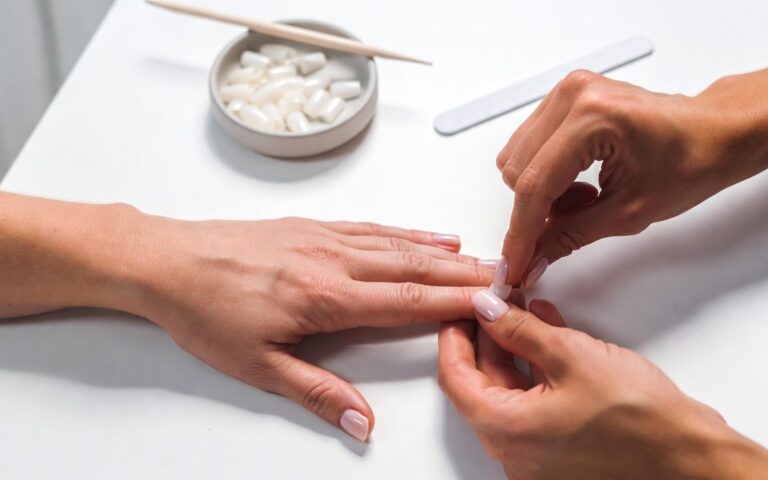
Press-on nails, in contrast, are pre-made artificial nails that you attach to your natural nails using adhesive tabs or nail glue. Modern press-ons are made from high-quality plastic or acrylic materials that closely mimic the look of salon nails. They come in countless designs, from simple nudes to elaborate nail art, and can be applied at home in about 30 minutes.
The key difference is that press-ons are temporary and non-damaging when applied and removed correctly. They sit on top of your natural nail rather than bonding with it through chemical processes. This fundamental distinction drives many of the differences in how these two options perform and affect your natural nails.
Cost Comparison: Initial and Long-Term
When it comes to cost, press-on nails have a significant advantage. A full set of acrylic nails typically costs $40 to $80 for the initial application, depending on your location and salon. But that’s just the beginning. Acrylics require maintenance fills every two to three weeks at $30 to $50 per visit. Over three months, you’re looking at $100 to $200 in fills, plus the initial set cost.
If you keep acrylics continuously for a year, you’ll spend anywhere from $500 to $1,000 or more. This doesn’t include the cost of removal if you decide to stop wearing them, which runs $10 to $30. The cost adds up quickly, especially if you opt for additional nail art, longer lengths, or specialty shapes that command premium prices.
Press-on nails, meanwhile, cost $8 to $15 for drugstore sets and $20 to $50 for premium brands. Custom handmade press-ons from nail artists can run $50 to $150, but even these are one-time purchases. A single set of press-ons lasts one to two weeks on average, and as we’ve discussed before, they can often be reused multiple times with proper care.
If you buy a new set of $12 press-ons every two weeks for a year, you’ll spend about $300. But if you reuse sets even just once, that drops to $150. Even with premium $30 sets, annual costs are typically under $500—still less than acrylic maintenance. For people on a budget, press-ons are clearly more economical.
Time Investment
Time is another area where press-ons shine. A full set of acrylic nails takes 60 to 90 minutes at a salon, and fill appointments take 45 to 60 minutes. Factor in travel time to and from the salon, and you’re looking at two to three hours committed to each visit. For busy people, scheduling regular salon appointments can be challenging.
Press-on nails take 20 to 45 minutes to apply at home, depending on your experience level and the complexity of prep work. There’s no travel time, no waiting for an appointment, and you can do it on your own schedule—even late at night or early in the morning. If a nail pops off, you can fix it immediately rather than dealing with a damaged nail until your next salon appointment.
The convenience factor extends to removal as well. Acrylic removal requires a salon visit and 30 to 45 minutes of soaking, filing, and nail care. Press-ons can be removed at home in 15 to 20 minutes whenever you’re ready for a change. This flexibility is invaluable for people with unpredictable schedules or those who like to change their nail look frequently.
Durability and Longevity
This is where acrylics have traditionally held a major advantage. A properly applied set of acrylic nails is incredibly durable and can withstand considerable daily wear. Acrylics don’t pop off—they’re chemically bonded to your natural nail and will stay put until they grow out. You can do dishes, type extensively, work with your hands, and generally live your life without worrying about losing a nail.
Acrylic nails typically last two to three weeks before the growth at your cuticle becomes noticeable enough to need a fill. The actual nail itself can remain intact and undamaged for this entire period. Breaks or chips are relatively rare with quality acrylic application, and when they do occur, they can be repaired at the salon.
Press-on nails have improved dramatically in longevity but still don’t quite match acrylics. With adhesive tabs, press-ons typically last three to seven days. With nail glue and perfect application, they can last up to two weeks, occasionally longer. However, it’s common for one or two nails to pop off before the others, requiring repairs or early removal.
The durability during wear is also different. Press-ons can pop off if subjected to excessive water exposure, if you use your nails roughly as tools, or if they experience impact. They require more conscious protection than acrylics. That said, modern high-quality press-ons with proper application are quite durable and can withstand normal daily activities just fine.
Impact on Natural Nail Health
This category represents perhaps the biggest difference between these options, and it’s where press-on nails have a clear advantage. Acrylic application requires filing and buffing your natural nail surface to create a rough texture for adhesion. This removes the top protective layer of your nail. The chemicals used in acrylic application—particularly the primer and the monomer—can be harsh on nails and surrounding skin.
Long-term acrylic wear often leads to thin, weak natural nails. When you finally remove acrylics after months or years of continuous wear, your natural nails are typically in poor condition. They’re thin, brittle, prone to peeling, and may have developed ridges or other damage. Recovering from extended acrylic wear can take several months of intensive nail care.
The removal process for acrylics also damages natural nails. Even when done properly by professionals, the acetone soaking and filing required to remove acrylics is harsh. Improper removal—like picking or prying off acrylics—can cause severe damage including nail bed separation.
Press-on nails, when applied and removed correctly, cause minimal to no damage to your natural nails. The preparation involves light buffing rather than aggressive filing, and the adhesive sits on top of your nail rather than bonding with it chemically. You can wear press-ons continuously or take breaks between sets to let your natural nails recover.
The key phrase is “when applied and removed correctly.” Improper press-on removal—peeling them off forcefully—can damage natural nails. But proper removal with soaking is gentle and safe. Many dermatologists and nail health experts recommend press-ons over acrylics for people concerned about nail health.
Appearance and Customization
Acrylics have traditionally offered more customization because they’re hand-sculpted on your nails. You can get any length, any shape, and any design limited only by your nail technician’s skill and creativity. The nails can be made thin and natural-looking or thick and dramatic. Complex 3D nail art, encapsulated designs, and structural embellishments are all possible with acrylics.
The smooth, seamless look of professionally applied acrylics is hard to beat. There’s no visible line where the artificial nail meets your natural nail (though this grows visible as your nails grow out). The nail tech can customize the fit perfectly to your individual nail shape and curvature.
However, modern press-on nails have closed this gap significantly. High-quality press-ons come in numerous sizes to fit different nail widths, and the variety of designs available is staggering. You can find press-ons that look identical to expensive acrylic sets, complete with intricate nail art, rhinestones, and 3D elements.
Custom press-on nails from independent nail artists offer the same level of personalization as salon acrylics. These artists create hand-painted, custom-sized press-ons tailored to your specific nails and design preferences. The result is often indistinguishable from acrylics in photos and from a distance.
The one area where press-ons can sometimes fall short is the seam where they meet your natural nail. Depending on fit and application, this line can be visible up close. However, proper sizing and application technique minimize this issue, and many people never notice it at all.
Lifestyle Considerations
Your daily activities and lifestyle significantly impact which option is better for you. If you work with your hands extensively—whether in healthcare, food service, childcare, construction, or other hands-on fields—acrylics generally hold up better. They won’t pop off during busy shifts, and they maintain their appearance even with constant hand washing and rough use.
For athletes, musicians, or anyone who needs to use their hands in specialized ways, press-ons offer flexibility. You can remove them for activities where long nails would be problematic, then reapply them afterward. Try doing that with acrylics and you’re looking at expensive salon visits both ways.
If you travel frequently, press-ons are more convenient. You can bring multiple sets and apply them in your hotel room. If a nail pops off while traveling, you can fix it yourself. With acrylics, a damaged nail during travel means either dealing with it or trying to find a salon in an unfamiliar location.
For people who like to change their look frequently, press-ons are ideal. You can have red nails for Valentine’s Day, switch to pastels for spring, wear professional nudes for work, and try wild designs on weekends. This variety would be prohibitively expensive with acrylics. Acrylics work better for people who want one consistent look for extended periods.
Water exposure is another consideration. While both acrylics and press-ons can handle normal hand washing, press-ons are more vulnerable to prolonged water exposure. If your lifestyle involves frequent swimming, long baths, or extensive water work, acrylics will hold up better even with gloves.
Skill and Learning Curve
Applying acrylic nails properly requires professional training and significant practice. It’s not something you can learn from a YouTube video and do well at home. The chemistry, technique, and artistry involved take time to master. For most people, acrylics mean professional application every time.
This isn’t necessarily a negative—many people enjoy the salon experience and prefer to leave nail work to professionals. But it does mean you’re dependent on finding a skilled nail technician you trust and making appointments that fit their schedule.
Press-on nails, on the other hand, are designed for home application by people with no special training. The learning curve is minimal—most people can apply press-ons reasonably well on their first try and achieve excellent results by their second or third set. There are no special skills required, and mistakes are low-stakes since you can simply remove and reapply.
The accessibility of press-ons means you have complete control over your nail look without depending on anyone else’s availability or skill level. This independence appeals to many people, especially those who enjoy the DIY aspect of beauty routines.
Maintenance and Upkeep
Acrylic nails require professional maintenance fills every two to three weeks. As your natural nails grow, the gap at your cuticle becomes visible and needs to be filled in. This maintenance is non-negotiable—skipping fills leads to an unkempt appearance and increases the risk of nail damage or lifting.
Between fills, acrylic maintenance is relatively low. You can moisturize your cuticles and keep nails clean, but there’s not much else required. The nails stay looking good with minimal effort, which some people prefer.
Press-on nails require no maintenance during wear, but the entire set needs to be replaced every one to two weeks. Some people see this as a positive—a fresh, clean set regularly—while others prefer the longer wear time of acrylics. If one press-on nail pops off, you can glue it back on at home, which is more convenient than waiting for a salon appointment to fix a broken acrylic.
The removal and reapplication cycle with press-ons gives you regular opportunities to check on your natural nail health and adjust your routine. With acrylics, your natural nails are hidden for months at a time, and damage can accumulate unnoticed.
Health and Safety Concerns
The chemicals used in acrylic application—particularly methyl methacrylate monomer—have strong odors and can cause respiratory irritation in some people. Many nail salons have strong chemical smells that some find unpleasant or even problematic. Nail technicians who work with acrylics daily face occupational exposure to these chemicals.
Some people develop allergies to acrylic chemicals, experiencing redness, swelling, itching, or even nail separation. These reactions can develop even after years of problem-free acrylic wear. Once you develop an acrylic allergy, you typically can’t wear them anymore.
The filing and drilling involved in acrylic application and removal creates nail dust that both technicians and clients inhale. While reputable salons have ventilation systems and dust collectors, exposure is still a concern for people with respiratory sensitivities.
Press-on nails involve minimal chemical exposure. The adhesives used—whether tabs or glue—are generally mild, and application doesn’t create dust or strong fumes. The process is safer for both the wearer and anyone nearby. For people with chemical sensitivities, pregnancy, or respiratory conditions, press-ons are the better choice.
However, improper use of press-on nail glue can cause problems. Getting glue on your skin can cause irritation, and some people develop allergies to cyanoacrylate (the main ingredient in nail glue). Using adhesive tabs instead of glue eliminates even this minimal chemical exposure.
Social and Professional Acceptability
Both options can look professional and polished when done well. The stigma that once surrounded press-on nails as “cheap” or “fake-looking” has largely disappeared as quality has improved. Many people can’t tell the difference between high-quality press-ons and salon acrylics, especially in professional settings.
That said, workplace dress codes sometimes have specific rules about nail length and style. If your workplace restricts nail length, press-ons offer an advantage—you can wear them outside work and remove them for shifts. With acrylics, you’re committed to that length 24/7 unless you get them shortened at a salon.
For special events like weddings, proms, or formal occasions, both options work beautifully. Acrylics guarantee your nails will last through multi-day events without any popping off, while press-ons allow you to remove them immediately after the event if desired.
Environmental Considerations
Neither option is particularly environmentally friendly, but there are differences. Acrylic application uses chemicals that need proper disposal, and the process creates waste in the form of used materials, cotton, foils, and nail dust. The environmental impact is mainly concentrated at the salon level.
Press-on nails create plastic waste when disposed of, though they produce less waste overall if reused multiple times. The packaging and shipping of mass-produced press-ons has environmental impacts. However, some companies are moving toward more sustainable materials and packaging.
For eco-conscious consumers, the ability to reuse press-ons multiple times makes them slightly better environmentally. Choosing press-ons from companies using recycled materials or eco-friendly packaging further reduces impact.
The Verdict: Which Is Better?
There’s no universal answer because “better” depends on your priorities. Choose acrylics if you want maximum durability that lasts two to three weeks without maintenance, can commit to regular salon appointments and the associated costs, value the ability to do anything with your hands without worrying about nails popping off, want highly customized, sculpted nails done by professionals, or don’t mind the impact on your natural nail health.
Choose press-on nails if you prioritize natural nail health and want to avoid damage, prefer the convenience of at-home application on your schedule, want to save money compared to regular salon visits, like changing your nail look frequently, need the flexibility to remove nails when necessary, have chemical sensitivities or are pregnant, or want to be able to reuse nails and get multiple wears from one purchase.
For many people, the answer isn’t either/or but rather both at different times. You might wear acrylics for a three-month period when you want hassle-free nails, then switch to press-ons for the next few months to let your natural nails recover. Or you might use press-ons as your regular go-to and only get acrylics for special occasions when you need guaranteed longevity.
A Hybrid Approach
Some people have found creative ways to combine the benefits of both. One strategy is to use press-ons most of the time but get acrylics for specific occasions like vacations or major events where you can’t risk nail failure. This gives you the best of both worlds—everyday flexibility and special occasion reliability.
Another approach is to alternate three-month cycles: wear acrylics for three months, then switch to press-ons for three months to let your natural nails recover. This provides variety while preventing long-term damage from continuous acrylic wear.
You can also use press-ons to “test drive” nail lengths and shapes before committing to acrylics. Not sure if stiletto nails are for you? Try them in press-on form first. This prevents the disappointment and expense of getting acrylics in a shape you end up disliking.
The Future of Both Options
Both acrylic and press-on technology continue to evolve. New acrylic formulas are being developed with lower odor and gentler ingredients. Techniques like gel-acrylic hybrids offer some of the benefits of both systems. At-home acrylic kits are improving, though they still can’t match professional results.
Press-on nail technology is advancing rapidly with better adhesives that last longer, improved materials that look more realistic, and more size options for better fits. Some companies are now offering semi-custom sizing where you send in measurements and receive press-ons made to fit your exact nail dimensions.
As press-ons continue to improve, the gap in durability and appearance between them and acrylics will likely continue to narrow. We may reach a point where press-ons match acrylics in every aspect except the permanence—and for many people, the temporary nature of press-ons is actually a feature, not a bug.
Making Your Decision
Consider your priorities carefully when choosing between acrylics and press-ons. Make a list of what matters most to you: cost, time, nail health, durability, appearance, flexibility, or convenience. Weight each factor based on your personal situation and lifestyle.
Try both options if you’re unsure. Get one set of acrylics to experience the process and longevity. Apply a set of high-quality press-ons to see how they work for you. First-hand experience is the best way to determine which option suits your needs and preferences.
Talk to people you know who wear each type. Ask about their experiences, frustrations, and satisfaction levels. Look at their nails in person to see the real-world appearance of both options. Social media and marketing photos often don’t represent typical results.
Remember that your choice isn’t permanent. You can try one option for a few months and switch if it’s not working for you. Your nail needs might change with life circumstances—a new job, a move, different hobbies—and the best option might change along with them.
Final Thoughts
Both acrylic nails and press-on nails have their place in the modern nail care landscape. Acrylics offer unmatched durability and longevity for people who want set-it-and-forget-it nails and don’t mind the commitment and cost. Press-ons provide flexibility, affordability, and nail-health-conscious options for people who want beautiful nails without the damage or expense.
The improvement in press-on quality over recent years has made them a legitimate alternative to acrylics for many people. They’re no longer just a temporary fix or a budget option—they’re a genuinely viable choice that offers distinct advantages. For some people, press-ons are actually the superior option given their priorities and lifestyle.
The “better” choice is ultimately the one that aligns with your personal needs, values, and circumstances. Consider all the factors—cost, time, health impact, durability, convenience, and appearance—and make the choice that works best for your life. Whether you choose acrylics, press-ons, or a combination of both, you can have beautiful nails that make you feel confident and polished.
Which do you prefer—acrylics or press-ons? What factors influenced your choice? Share your experiences in the comments below!