Essential Manicure Tools for Beginners: 2026 Guide
Are you completely tired of spending hundreds of dollars at expensive nail salons every single month? You are definitely not alone in this growing home beauty movement.
Building your own DIY manicure setup at home is easier and more affordable than ever before. However, walking into a beauty supply store or browsing online shop categories can quickly feel completely overwhelming.
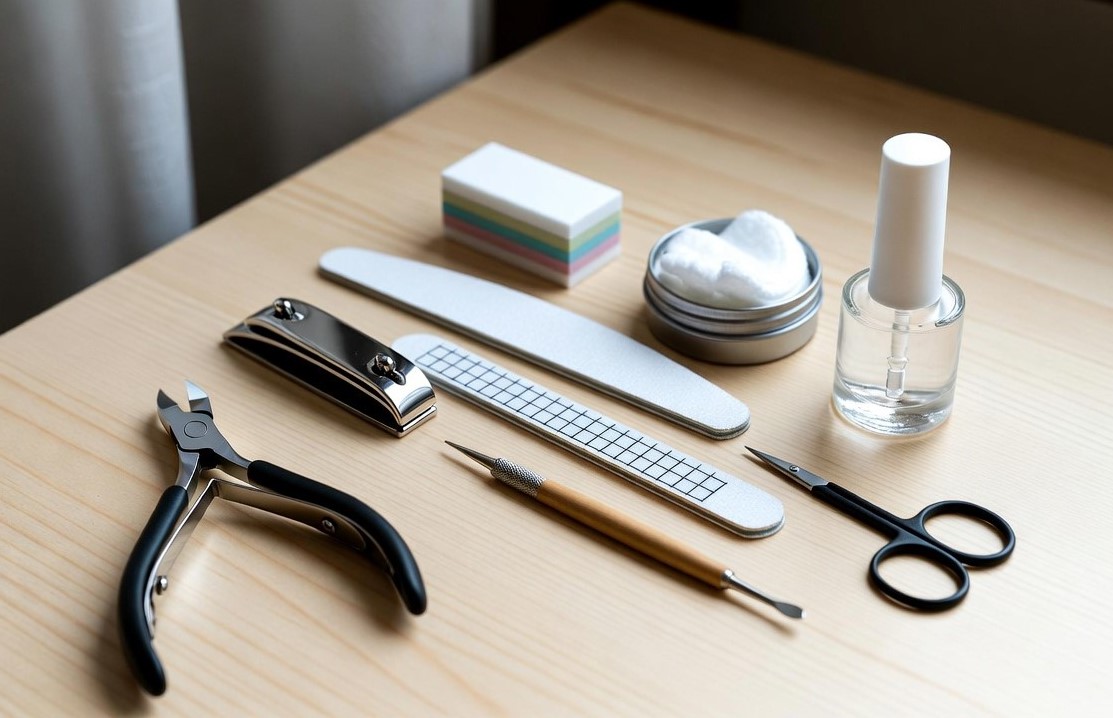
With hundreds of specialised clippers, electric files, buffers, and cuticle pushers available on the market, picking the right starter tools is tricky. Buying cheap or unnecessary gadgets often leads to wasted money and damaged natural nail beds.
In this comprehensive 2026 guide, we will break down the absolute essential manicure tools for beginners. You will learn exactly what each tool does, how to use them safely, and how to build a high-performing kit on a budget.
1. The Foundation: Premium Nail Clippers
Every successful at-home manicure routine starts with a clean, precise trim. Attempting to shorten long nails with dull clippers causes microscopic fractures across your natural keratin layers.
When selecting essential manicure tools for beginners, always choose stainless steel clippers with sharp, curved blades. Stainless steel resists rust, endures frequent sanitisation, and delivers a crisp cut without crushing the nail plate.
Keep two separate clippers in your starter kit: a standard curved clipper for fingernails and a straight-edge clipper for toenails. Straight edges prevent painful ingrown toenails by cutting squarely across the top.
2. High-Quality Glass Nail File
Traditional cardboard emery boards and harsh metal files are notorious for shredding natural nail edges. They create rough micro-tears that inevitably lead to peeling, splitting, and snagging.
A glass or crystal nail file is one of the most important essential manicure tools for beginners. Glass files feature ultra-fine, etched grit that seals the keratin layers together as you file.
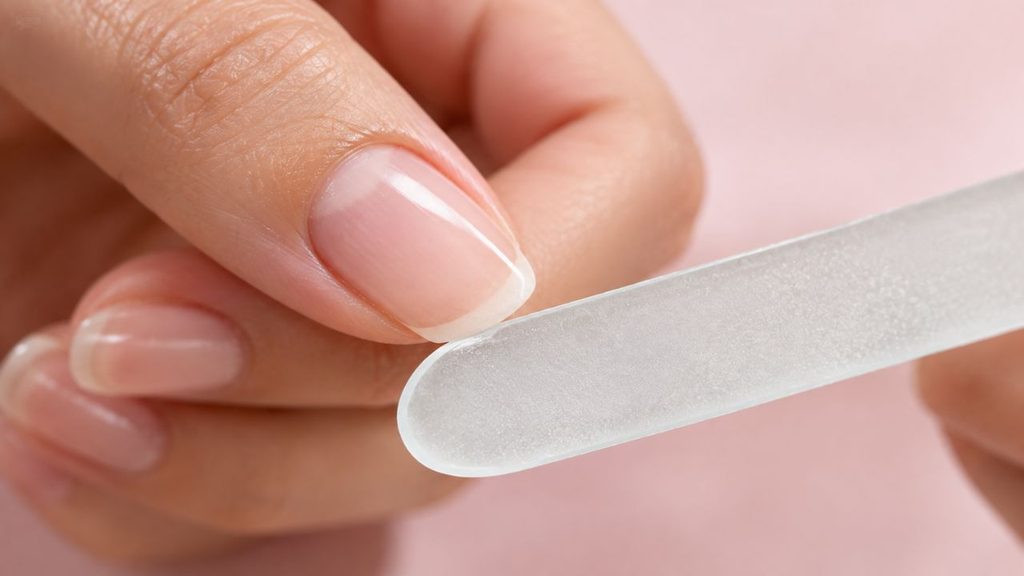
Benefits of Glass Files:
- Seals Natural Edges: Prevents future splitting by smoothing microscopic keratin fraying.
- Infinite Lifespan: Glass files never wear down or lose their grit like cheap emery boards.
- Easy Sanitisation: Simply rinse under warm water with soap after every use.
Always remember to file your nails in one continuous direction rather than sawing back and forth, which weakens the tip boundary.
3. Gentle Wooden Cuticle Pushers
Your cuticles act as a natural protective seal, preventing bacteria and moisture from entering the delicate nail matrix underneath. Damaging this area opens the door to painful infections and stunted growth.
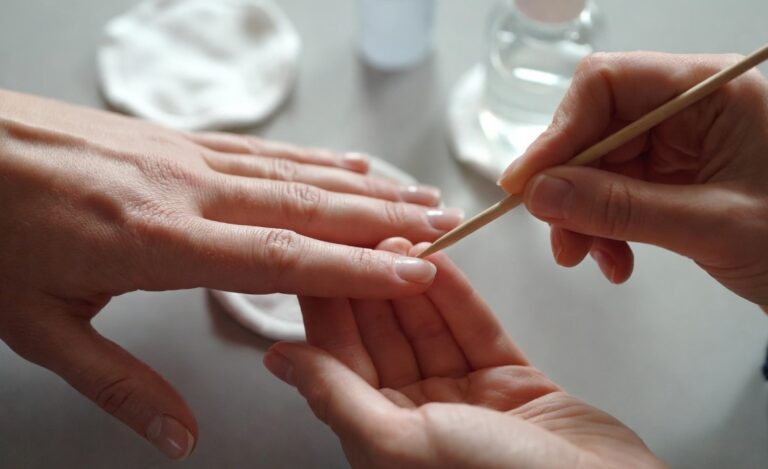
When gathering your essential manicure tools for beginners, opt for disposable wooden orange sticks rather than sharp metal pushers initially. Metal tools can easily gouge your soft nail plate if applied with too much pressure.
Soak your fingertips in warm, soapy water for three minutes to soften dead skin before gently pushing back the cuticle wall. If your natural nails feel weak or papery after gel removal, learning how to repair damaged nails before pushing cuticles is essential for long-term health.
4. Precision Cuticle Nipper
There is a massive difference between pushing back dead cuticle skin and recklessly cutting live tissue. You should never cut your healthy cuticle boundary, as it leads to inflammation and thick, ragged regrowth.
However, a sharp cuticle nipper is necessary for safely trimming stubborn hangnails and dead, loose sidewall skin.
| Tool Name | Primary Purpose | Beginner Safety Level |
| Glass File | Shapes and seals natural free edges. | Very Safe |
| Orange Stick | Gently pushes back softened cuticle walls. | Very Safe |
| Cuticle Nipper | Trims hangnails and dead sidewall skin. | Use with Care |
| Nail Buffer Block | Smooths ridges and creates a high shine. | Safe (Use Moderately) |
Include a small, stainless steel nipper in your essential manicure tools for beginners’ collection, but use it strictly for dangling hangnails.
5. Multi-Sided Buffer Block
Uneven ridges and dull natural surfaces make applying smooth polish nearly impossible. A four-way buffer block levels your nail plate, creating a glass-like canvas for polish adhesion.
Each side of a buffer block features a different grit level designed for a specific job:
- Side 1 (Coarse): Files nail edges gently.
- Side 2 (Medium): Removes deep surface ridges.
- Side 3 (Fine): Smooths out minor surface imperfections.
- Side 4 (Ultra-Fine): Buffs natural nails to a high, glossy shine.
Use buffer blocks sparingly—no more than once every two weeks. Over-buffing thins your natural nail plate, making it fragile and sensitive. If you want to know how Polish formulas react to smooth nail canvases, review our detailed breakdown on gel vs regular polish to pick your ideal lacquer type.
6. Nourishing Cuticle Oil
No at-home manicure kit is complete without deep hydration. Frequent washing, acetone use, and daily chores strip natural oils away, causing dry, cracked skin borders.
Cuticle oil nourishes the matrix area, stimulating healthy, flexible growth from within. When organising your essential manicure tools for beginners, choose oils packed with jojoba, vitamin E, sweet almond, or argan oils.
According to dermatologists, keeping cuticles hydrated protects the nail root; explore expert medical advice on dermatologist-approved nail care basics to maintain skin barrier health.
To keep skin soft and plump around fresh polish, pair your setup with the best cuticle oil for healthy nail growth every single evening.
7. Hydrating Base Coat and Top Coat
Skipping base and top coats is the primary reason DIY manicures chip within two days. A quality base coat acts as a double-sided adhesive anchor, while a top coat seals pigments from scratches and UV light.
When choosing essential manicure tools for beginners, look for 10-free base coats that hydrate natural keratin without harsh chemicals like formaldehyde.
If you struggle with soft or brittle tips that crack easily under polish, read our guide on whether you overuse nail strengthener to pick the safest treatment layers.
8. Cleanup Brush and Pure Acetone
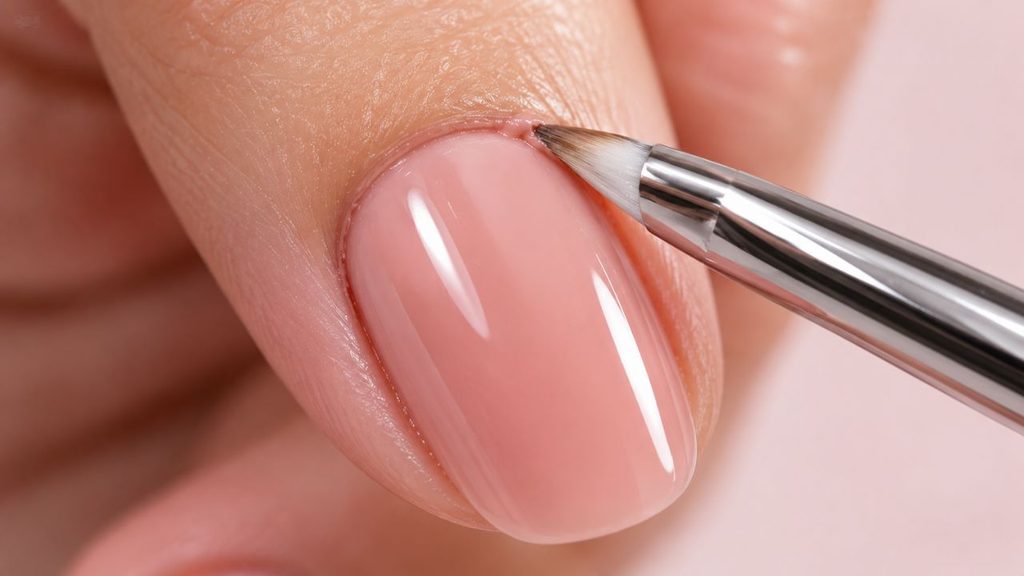
Even seasoned nail artists get tiny smudges of polish on their cuticle walls. The difference between an amateur DIY job and a clean salon look lies in your cleanup technique.
A small, angled synthetic makeup brush dipped in pure acetone easily erases polish mistakes around your nail bed borders.
Include a dedicated cleanup brush among your essential manicure tools for beginners to achieve crisp, professional edges without messing up fresh lacquer.
9. LED Curing Lamp (Optional for Gel Lovers)
If you prefer long-lasting gel manicures over regular nail lacquer, a compact UV/LED curing lamp is a mandatory tool.
Modern 48W LED lamps cure gel polish layers within 60 seconds, delivering an instant-dry, smudge-proof finish that lasts up to three weeks.
When building a kit of essential manicure tools for beginners, decide whether you prefer quick-change regular polishes or long-wear gels before investing in a lamp.
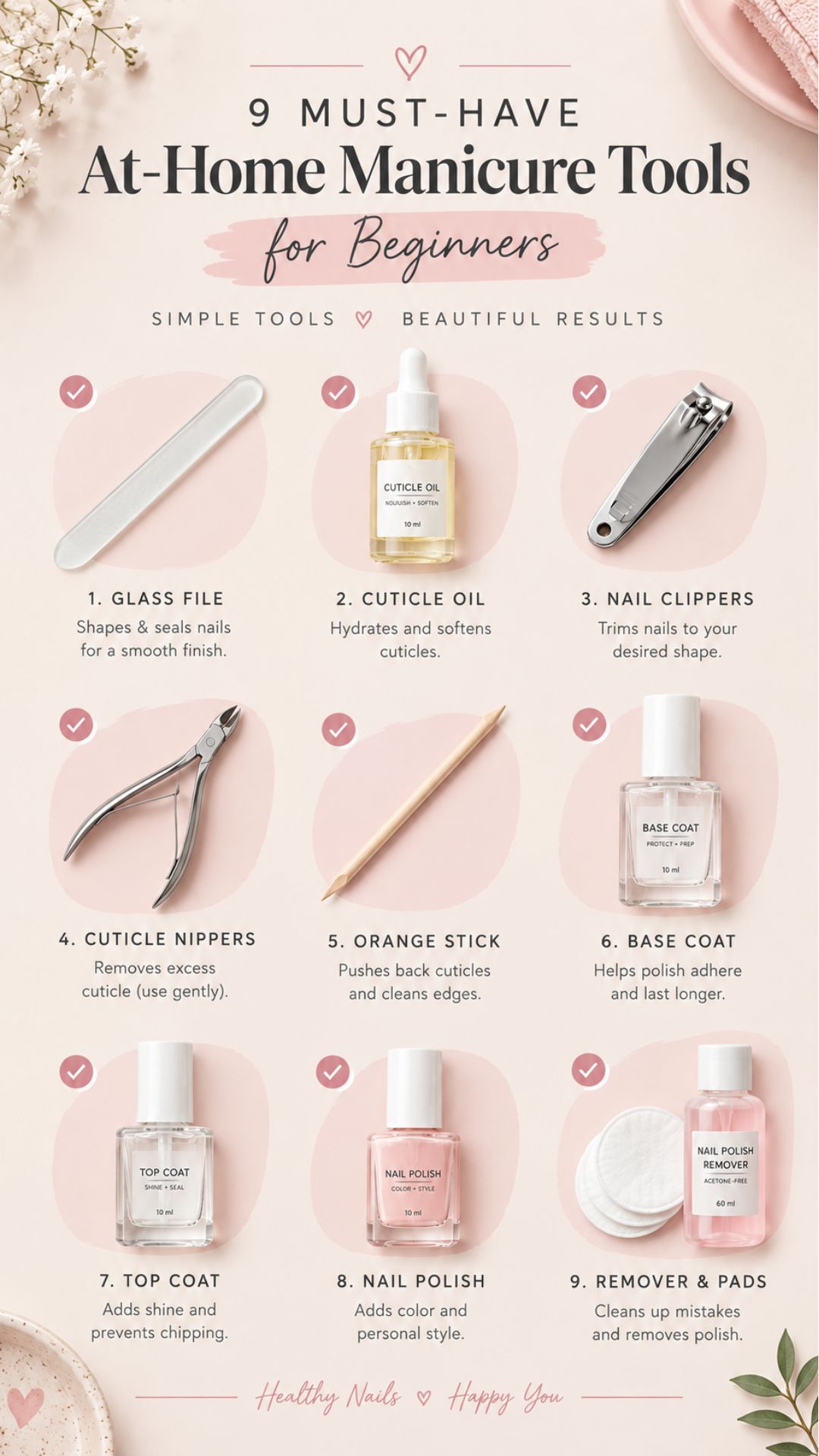
Quick Summary Checklist for Beginners:
- Clippers & Glass File: Trim accurately and seal edges without fraying.
- Orange Sticks & Nippers: Push back cuticles gently and trim hangnails safely.
- Buffer & Cuticle Oil: Smooth natural ridges and hydrate the underlying matrix daily.
- Base/Top Coats & Cleanup Brush: Anchor polish, seal shine, and clean up edges crisply.
FAQ: Starter Manicure Tools
What are the absolute minimum essential manicure tools for beginners?
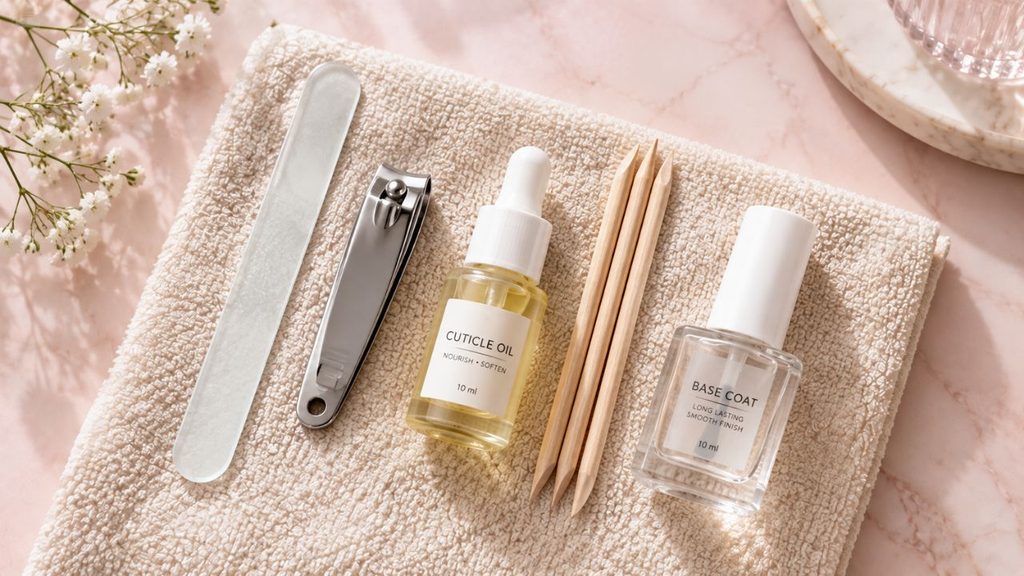
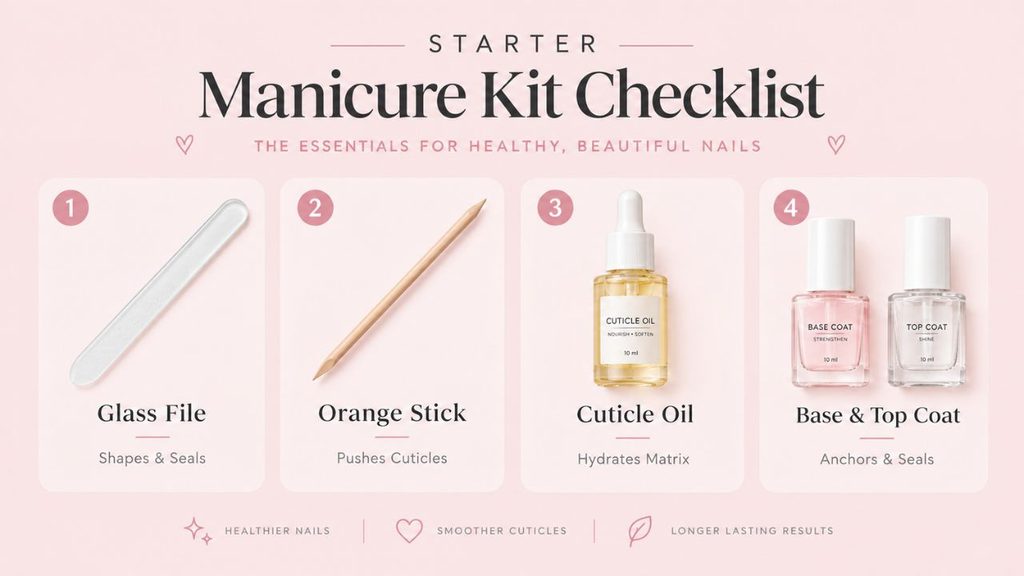
The bare minimum tools needed for a clean, natural manicure are a glass nail file, a wooden cuticle pusher, cuticle oil, and a protective base coat.
Are cheap manicure kits from Amazon safe to use?
Budget kits are fine as long as the metal tools are 100% stainless steel and the files are glass rather than harsh metal. Avoid cheap metal files that tear natural nails.
How often should I sanitise my manicure tools?
Sanitise metal tools, glass files, and cleanup brushes with 70% isopropyl alcohol after every single use to prevent bacterial buildup.
Summary
Building a reliable collection of essential manicure tools for beginners does not require spending hundreds of dollars on professional equipment. By investing in a few core items—like a glass file, wooden pushers, cuticle oil, and quality base/top coats—you can achieve flawless, salon-worthy manicures at home while keeping your natural nails strong and healthy.
Prioritise natural hydration, sanitise your tools regularly, and enjoy creating gorgeous home nails!